
"Sudan coffee culture"
200 article(s) found

Drinking coffee in North Africa
Due to work, I went on a business trip to Algeria, North Africa, and took the opportunity to experience the coffee culture of the second largest country in Africa. Algeria was ruled by Rome, Byzantium, Turkey, Arabia and France in its history. There is a blend of various cultures, and most of the buildings are European-style buildings, walking on the streets, if not for the occasional mosque.
The characteristics of several real estate coffees
Angola is the fourth largest coffee industry in the world, but it produces only a small amount of Arabica coffee and is of high quality. The origin of coffee in Angola: 98% of the coffee in Angola (Angola) is Roberts coffee. The former best brands in Angola are Ambriz, Amborm and NovoRedondo, all of which are of consistent quality.

A brief introduction to the origin, development, history and culture of excellent tin card boutique coffee beans
Tibica coffee, native to Ethiopia and southeastern Sudan, is the most widely cultivated variety of coffee in the Western Hemisphere. The plant is stronger, but not light-tolerant, and the yield is higher in Hawaii. The top leaf of Tibika is red and copper, which is called red top coffee. Bourbon coffee is a variety of small-grain coffee second only to Tibica. At first, the main branch and the trunk grew upward at 45 degrees, drooping with the fruit load, and lateral branches.

Unique style Ethiopian Banci Maggie Boutique Coffee Bean Planting Location Climate Sea
Gesha Estate, Banki Magi, although different from Geisha in Panama, is still worth tasting, rare in Ethiopia's sun-baked bean region, with a variety of spices and fruit flavors. This estate is owned by Gashaw Kinfe Desta, and is very close to Geisha Town. The town of Geisha was also the birthplace of the now-famous variety Geisha, Geish.

Comparison of three major coffee farms in Colombia: coffee varieties. Shading trees and fermentation treatment
Professional barista communication please follow the coffee workshop (Wechat official account cafe_style) this time is about three Colombian coffee farms, the first La Palma y El Tcan is attracted by their fermentation methods, the other Finca Santuario is because the author recently bought their love elixir, so want to know more, the third is Finca Santuario

Introduction to the treatment methods of the three best coffee farms in Colombia
Professional baristas please follow the coffee workshop (Wechat official account cafe_style) this time it is about three Colombian coffee farms. The first La Palma y El Tcan is attracted by their fermentation methods, and the other Finca Santuario is because the author recently bought their love elixir, so I want to know more. The third is Finca Santuario's sister.
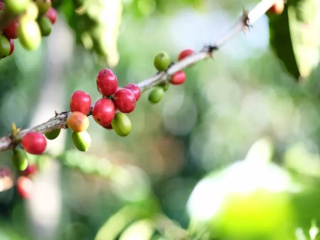
What kind of coffee is the first hybrid F1?
In coffee, it is not uncommon to name varieties with "letters + numbers", such as SL28 and SL34, which were selected by the Scot laboratory in Kenya, and F1 introduced today is also the result of a coffee variety selection program. The difference is that F1 does not refer to a variety, but to a type or a

Katim Coffee Bean Grown at Low Altitude History and Culture
Katim, as a breed that has taken root in Yunnan, I love and hate it. Although it had many shortcomings and was not suitable for high-altitude cultivation, there was still a lot of room for improvement, and it was getting better and better. How to discover more of its advantages and take advantage of it is the most important. In the domestic circle of popular light baking pursuit of sour aroma and sweet taste

Introduction to the unique flavor and taste of Ethiopian Bancimaji coffee
Http://www.gafei.com/banqimaji/2016083075434.html in July 1991, EGF hosted a national conference with the participation of more than 20 political and ethnic organizations. The meeting adopted the Transitional Charter and elected an 87-member House of Representatives, with EGF Chairman Meles Zenawi as President of the Transitional Government and President of the House of Representatives. A transitional government was established. 24 May 1993

Background of Ethiopian Coffee cultivation in Ethiopian Coffee producing areas Sidamo and Yejasuefi
For professional baristas, please follow the coffee workshop (Wechat official account cafe_style) the Danakir depression Ethiopia (The Federal Democratic Republic of Ethiopia) is a landlocked country in northeast Africa with a land area of 1103600 square kilometers. Ethiopia borders Djibouti and Somalia to the east, Sudan to the west, and Kenya to the south.

A brief introduction to the Origin, Development, History and Culture of Katim Fine Coffee beans suitable for Deep Baking
Catimor: in 1959, the Portuguese mixed Brazilian Kaddura and Timo to develop a disease-resistant Katim / Katimo, which is now an important variety of commercial beans. Coffee is a short-day plant. Coffee has the characteristics of multiple flowering and concentrated florescence. The florescence of small seed coffee in Yunnan is 27 months, and the flowering period is 35 months. The flowering of coffee is affected by the climate, especially the rain

A brief introduction to the Origin, Development, History and Culture of Katim Fine Coffee beans with obvious Fruit flavour
The output of Tiebika in Yunnan coffee is the lowest and the most expensive, and it also belongs to the best of Arabica species in the world, of which the Blue Mountains of Jamaica and Kona of Hawaii can be said to be Tibica. Due to changes in origin and some cultivation, Yunnan Tiebika is softer and sour is not as sour as Blue Mountain. But generally speaking, Tibica tastes light (it should be very light).

A brief introduction to the Origin, Development, History and Culture of Katim Fine Coffee beans with a long aftertaste
The output of Tiebika in Yunnan coffee is the lowest and the most expensive, and it also belongs to the best of Arabica species in the world, of which the Blue Mountains of Jamaica and Kona of Hawaii can be said to be Tibica. Due to changes in origin and some cultivation, Yunnan Tiebika is softer and sour is not as sour as Blue Mountain. But generally speaking, Tibica tastes light (it should be very light).

A brief introduction to the History and Culture of the Origin and Development of Katim Fine Coffee beans with stable production
Katim is a variety introduced later, with a relatively stable output and strong resistance to diseases and insect pests. It is planted in a large area in Yunnan, and now it is easy to buy Katim beans on the market. Katim aa beans are also exported beans, which is not bad on the whole. Not to mention in China, even in the whole of Asia, Yunnan's beans are very excellent. As for cat shit, Manning, etc.

A brief introduction to the Origin, Development, History and Culture of Iron Card Fine Coffee beans with slightly fruity Flavor
Small grain coffee is suitable for growing in the mountains at an altitude of 8001800 meters. If the altitude is too high, it will taste sour, and if it is too low, it will taste bitter. Small grains of coffee are mostly planted in dry and hot valleys about 1100 meters above sea level, so they are moderately sour, rich and mellow. There is a unique environment suitable for the growth of small seed coffee in many areas of Yunnan, and the quality of small seed coffee is excellent. The planting area is mainly distributed in the

Common sense of Coffee Culture different Coffee cultures around the World
People in Arab countries like to drink small cups of sweet coffee. Second, at breakfast in France, the French like to drink coffee in a bowl and make a fragrance with chicory roots. The French generally prefer lighter coffee than the Italians. This kind of coffee is generally made from moderately roasted and coarsely ground coffee beans by soaking. III. The Netherlands
Turkish pot Cezve Turkish pot is one of the few or even the only choice for brewing.
Abstract: when coffee circulated in the Arab world and even in early Europe, Turkish pots were few or even the only choice for brewing. If I asked which coffee utensils were the most important, I would probably answer: Turkish pots were one of the few or only brewing options when coffee circulated in the Arab world and even in early Europe.

A brief introduction to the origin, development, history and culture of the most classic tin card boutique coffee beans
All the varieties planted in Pu'er area of Yunnan are catimor (Katim). As early as 1950s, typica and bourbon were introduced in Baoshan City, and the locals called them old varieties. Because the old varieties have low disease and pest resistance and yield, and the management is relatively expensive and manpower, coupled with the market purchase price does not have many advantages, brown farmers have changed to new varieties in recent years.

A brief introduction to the Origin, Development, History and Culture of Iron Card Fine Coffee beans with strong aroma
Small grain coffee is suitable for growing in the mountains at an altitude of 8001800 meters. If the altitude is too high, it will taste sour, and if it is too low, it will taste bitter. Small grains of coffee are mostly planted in dry and hot valleys about 1100 meters above sea level, so they are moderately sour, rich and mellow. There is a unique environment suitable for the growth of small seed coffee in many areas of Yunnan, and the quality of small seed coffee is excellent. The planting area is mainly distributed in the

A brief introduction to the Origin, Development, History and Culture of Red Top Coffee and Iron Card Fine Coffee beans
Small grain coffee is suitable for growing in the mountains at an altitude of 8001800 meters. If the altitude is too high, it will taste sour, and if it is too low, it will taste bitter. Small grains of coffee are mostly planted in dry and hot valleys about 1100 meters above sea level, so they are moderately sour, rich and mellow. There is a unique environment suitable for the growth of small seed coffee in many areas of Yunnan, and the quality of small seed coffee is excellent. The planting area is mainly distributed in the